


1. GENERAL ASPECTS
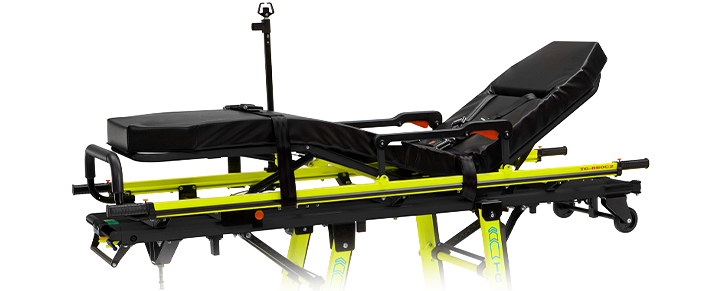
This section answers fundamental questions about the operation, characteristics and types of mechanical stretchers. It provides an introduction to what a mechanical stretcher is, how it is designed, and the role it plays within ambulance and patient transport equipment.
What is a mechanical stretcher and how does it work?
A mechanical stretcher is a patient transport device that operates through manual systems, without electrical assistance, using structural mechanisms and articulated components to allow different operating positions.
Its operation relies on direct user input, with the EMS professional controlling the lifting, lowering and movement of the stretcher. These actions are performed through mechanical systems designed to provide stability, strength and reliability in everyday use.
Mechanical stretchers are characterized by their operational simplicity and robust construction, making them suitable for a wide range of healthcare and emergency service environments.
What types of mechanical stretchers are available?
There are several types of mechanical stretchers, each designed to meet different operational requirements.
The most common include ambulance stretchers such as the JÚPITER series, as well as specialized devices such as scoop stretchers and scissor stretchers, which are typically used in specific rescue and patient transfer situations.
Although each type is designed for a particular application, all share the same manual operating principle.
What is the weight capacity of a mechanical stretcher?
The weight capacity depends on the specific model, but mechanical stretchers are designed to safely support high patient loads.
In products such as the JÚPITER TG-880 series, the Safe Working Load (SWL) can reach up to 280 kg, making them suitable for the vast majority of patient transport scenarios.
This value should always be understood as the maximum safe working load under normal operating conditions.
What materials are used in the manufacture of mechanical stretchers?
Mechanical stretchers are manufactured using materials selected to provide strength, durability and low weight.
Commonly used materials include aluminum alloys, steel components and corrosion-resistant treatments designed to withstand demanding operating environments. This combination allows manufacturers to create robust structures without excessively increasing the overall weight of the equipment.
Material selection plays a critical role in ensuring long-term reliability and performance.
What advantages do mechanical stretchers offer compared to other systems?
Mechanical stretchers stand out for their simplicity, reliability and ease of maintenance.
Because they do not depend on electrical systems, they have lower technical complexity and greater tolerance to demanding operating conditions. This makes them a highly robust solution for many ambulance services and healthcare providers.
In addition, their straightforward design allows direct operation without the need for powered assistance, which can be advantageous in environments where simplicity and reliability are prioritized.
How much does a mechanical stretcher weigh?
The weight of a mechanical stretcher varies depending on the model and configuration, but it is generally lower than that of an electric stretcher.
This is mainly due to the absence of batteries, electric motors and electrohydraulic systems. As a result, mechanical stretchers are lighter, which may facilitate handling in certain situations.
However, their lower weight does not eliminate the need for proper manual handling techniques during daily use.
What is the service life of a mechanical stretcher?
The service life of a mechanical stretcher depends primarily on usage intensity and maintenance practices.
Thanks to their lower technical complexity, mechanical stretchers can provide many years of reliable service when properly maintained and serviced using approved components.
Intensive use or inadequate maintenance may shorten their lifespan, making it essential to follow the manufacturer’s maintenance recommendations.
What role does a mechanical stretcher play within ambulance equipment?
The mechanical stretcher is one of the most important pieces of equipment inside an ambulance, as it enables the safe transportation of patients from the scene of an incident to a healthcare facility.
Its design is intended to integrate seamlessly with the vehicle’s stretcher fastening system while supporting efficient patient handling in a wide variety of situations.
For this reason, stretcher selection and configuration should always be adapted to the type of service provided and the expected operating conditions.
How do you choose a stretcher according to the type of ambulance (Class A1, A2, B or C)?
When selecting a mechanical stretcher, the focus should be placed on operational simplicity, robustness and suitability for the intended service.
In Class A1 and A2 ambulances, where transport operations are generally less demanding, mechanical stretchers provide a reliable, easy-to-maintain solution that is fully capable of meeting most operational needs.
In Class B and Class C ambulances, mechanical stretchers remain a viable option, although greater attention must be given to handling techniques and workflow organization, particularly in services with high patient transport volumes.
The final choice should be based on a balance between patient workload, operating conditions and the needs of the EMS team.
Are interchangeable stretcher systems available for mixed vehicle fleets?
For mechanical stretchers, interchangeability is generally simpler from a technical perspective because the system does not depend on electrical components.
However, all vehicles must still be equipped with compatible stretcher fastening systems and standardized configurations to ensure safe and reliable operation.
Proper fleet planning can improve operational flexibility without compromising safety or efficiency.
How does patient type influence stretcher selection?
When using mechanical stretchers, patient characteristics primarily affect handling requirements and operational planning.
Heavier patients or those with limited mobility may require additional preparation, appropriate restraint systems and, in many cases, more than one operator to ensure safe patient handling.
The choice of stretcher should therefore take into account both patient characteristics and the operational capabilities of the EMS team.
2. REGULATIONS AND CERTIFICATIONS
This section covers the main regulations and legal requirements applicable to mechanical ambulance stretchers. Topics include certifications, approvals, crash performance, medical device compliance and quality standards.
What regulations must mechanical ambulance stretchers comply with?
Mechanical stretchers used in ambulance services must primarily comply with EN 1789 and EN 1865, which govern ambulance equipment and patient transport devices respectively.
EN 1789 establishes the requirements for equipment installed in ambulances, including its behavior during impact scenarios. EN 1865 defines design requirements related to structural strength, stability and patient safety during transport.
As medical devices, mechanical stretchers must also comply with Regulation (EU) 2017/745 on Medical Devices (MDR), which governs aspects such as traceability, risk management and product conformity before being placed on the market.
Compliance with these standards ensures an appropriate level of safety during both normal operations and emergency situations.
What regulatory differences exist between mechanical and electric stretchers?
From a regulatory perspective, both mechanical and electric stretchers must comply with the same core standards, particularly EN 1789, EN 1865 and the Medical Device Regulation (MDR).
The main difference is that mechanical stretchers do not incorporate electrical systems and are therefore not subject to additional requirements related to electrical safety or electromagnetic compatibility (EMC).
This simplifies the certification process, although it does not reduce the requirements related to structural strength, stability and patient safety during transport.
How does EN 1865 influence the design of a mechanical stretcher?
EN 1865 establishes the requirements a stretcher must meet to ensure safe use in patient transport operations.
These requirements include aspects such as:
- Safe Working Load (SWL)
- Structural strength
- Stability during movement
- Performance of patient restraint systems
In practice, this means that the stretcher must be designed to withstand dynamic loads, maintain structural integrity under demanding conditions and provide patient safety throughout the transport process.
What requirements must stretcher fastening systems meet?
The stretcher fastening system is a critical safety component and must comply with the requirements established by EN 1789.
The system must securely retain the stretcher within the vehicle, preventing movement during transportation or in the event of a collision. To achieve this, it must be specifically designed to work with the corresponding stretcher model and be correctly installed in the ambulance.
Proper integration between the stretcher and the fastening system is essential to ensure safe performance under real operating conditions.
The use of non-approved fastening systems can lead to failures and create significant risks for both patients and EMS personnel.
Is it mandatory to certify the stretcher–rail system as a complete assembly?
Yes. As with electric stretchers, the stretcher and fastening system must be certified together as a complete assembly.
System safety depends not only on the stretcher itself but on the behavior of the entire combination during a collision. For this reason, dynamic crash testing is performed on the specific stretcher, rail and vehicle fastening configuration.
The stretcher must always be used with compatible and correctly installed fastening systems. Non-approved configurations may compromise retention performance and create serious transport safety risks.
What technical documentation must accompany a mechanical stretcher?
A mechanical stretcher must be supplied with all documentation necessary to ensure safe and compliant operation.
This typically includes:
- CE marking
- EU Declaration of Conformity
- User manual
- Maintenance information
- Safety instructions
This documentation enables users to understand operating conditions, product limitations and maintenance requirements.
The user manual, in particular, forms an integral part of the product and should be retained throughout its service life.
What does a 20G certification mean for a stretcher fastening system?
A 20G certification confirms that the complete stretcher and fastening system assembly has been tested to withstand forces equivalent to twenty times its weight during a collision.
This certification is particularly important because it:
- Ensures the stretcher remains securely attached to the vehicle during an impact
- Protects both patients and EMS professionals
- Represents a key requirement for modern ambulance safety systems
These tests simulate real-world crash conditions to verify that the stretcher remains safely restrained within the patient compartment.
It is important to note that this certification applies to the entire system, including the stretcher, fastening system and vehicle installation.
What are 10G and 20G crash tests?
10G and 20G crash tests are dynamic tests designed to evaluate the ability of the stretcher and fastening system to withstand the forces generated during collisions or sudden deceleration events.
These tests assess:
- Structural integrity
- Retention capability
- Patient safety
- Performance of the fastening system
The entire stretcher–fastening system assembly is tested as a single unit to ensure that all components perform safely under extreme conditions.
Compliance with these requirements is essential to protect both patients and ambulance personnel during accidents.
What does Safe Working Load (SWL) mean?
Safe Working Load (SWL) refers to the maximum load that a stretcher can safely support during normal operating conditions.
This value takes into account:
- Structural strength
- Stability
- Safety margins established by applicable standards
SWL should not be confused with the loads applied during certification testing, which are significantly higher and are intended to validate performance under extreme conditions.
The SWL value must always be respected to ensure safe operation and preserve the integrity of the equipment.
What requirements apply to patient restraint systems on mechanical stretchers?
Patient restraint systems must comply with the requirements established by applicable ambulance and patient transport standards.
These systems are designed to:
- Secure the patient during transport
- Prevent unintended movement
- Improve safety during emergency braking or collisions
The effectiveness of the restraint system depends not only on its design but also on its correct use by EMS personnel.
Proper adjustment and regular inspection are essential to ensure safe patient transport.
What requirements does the Medical Device Regulation (EU) 2017/745 (MDR) impose on mechanical stretchers?
As medical devices, mechanical stretchers must comply with the requirements established by Regulation (EU) 2017/745.
The MDR requires manufacturers to demonstrate:
- Product safety
- Intended performance
- Risk management
- Product traceability
- Quality control throughout the manufacturing process
Manufacturers must also maintain post-market surveillance procedures and continuously monitor product performance throughout its lifecycle.
These requirements help ensure that mechanical stretchers remain safe and effective throughout their service life.
How does EN 1789 influence stretcher design and installation?
EN 1789 establishes the requirements for ambulance equipment, including stretchers and fastening systems.
The standard influences several aspects of stretcher design, including:
- Crash safety performance
- Compatibility with fastening systems
- Integration into ambulance vehicles
- Operational safety during transport
It also defines testing requirements intended to ensure that the stretcher remains securely restrained under collision conditions.
Compliance with EN 1789 is fundamental to achieving safe patient transport within an ambulance environment.
What fire-resistance requirements apply to stretcher mattresses and textiles?
Mattresses, straps and textile components used on mechanical stretchers must comply with fire-resistance requirements applicable to medical devices and ambulance interiors.
These materials are typically required to:
- Limit flame propagation
- Reduce smoke generation
- Contribute to occupant safety during emergencies
Fire-resistant materials play an important role in reducing risks inside the confined environment of an ambulance.
How does ISO 13485 influence the manufacture of mechanical stretchers?
ISO 13485 is the internationally recognized quality management standard for medical device manufacturers.
Its implementation requires manufacturers to control all processes related to:
- Product design
- Manufacturing
- Inspection and testing
- Distribution
- Traceability
Compliance with ISO 13485 helps ensure that each stretcher is manufactured consistently and meets established quality and safety requirements.
The standard also facilitates continuous improvement and effective management of corrective and preventive actions.
What documentation should ambulance operators keep for compliance purposes?
To ensure regulatory compliance and safe operation, ambulance services should maintain documentation related to:
- The stretcher
- The fastening system
- Maintenance activities
- Inspections and repairs
- Training records
Keeping accurate documentation supports compliance with regulations and helps demonstrate that equipment is being used and maintained according to the manufacturer’s recommendations.
Proper record keeping also contributes to improved operational safety and asset management.
Why is certification of the complete stretcher–fastening system important?
Patient transport safety depends on the performance of the entire stretcher retention system rather than on individual components alone.
Even if a stretcher and a fastening system are independently certified, they must be tested and approved together to ensure compatibility and safe performance during real-world use.
Using a certified stretcher–fastening system combination provides confidence that:
- The stretcher will remain securely restrained
- Crash performance requirements are met
- Patient and operator safety are maximized
For this reason, ambulance operators should always use approved combinations specified by the manufacturer.
3. SAFETY
This section covers the safety aspects associated with the use of mechanical stretchers. It addresses patient restraint systems, loading and unloading procedures, emergency situations, handling risks and best practices to ensure the safety of both patients and EMS professionals.
What safety systems are incorporated into mechanical stretchers?
Mechanical stretchers incorporate a range of safety features designed to provide stability and control during patient transport.
These typically include:
- Structural locking mechanisms
- Wheel braking systems
- Side rails
- Patient restraint systems
- Mechanical safety devices that prevent unintended movement
Together, these components help ensure safe operation during loading, unloading and transport procedures.
The effectiveness of these systems depends on both proper maintenance and correct use by trained personnel.
How do braking systems contribute to stretcher safety?
The braking system plays a critical role in maintaining stretcher stability whenever patient transfers or loading operations are being performed.
A properly functioning brake system helps:
- Prevent unintended movement
- Improve operator control
- Reduce the risk of accidents during patient handling
Brakes should always be engaged whenever the stretcher is stationary and before any patient transfer takes place.
Routine inspection of braking components is essential to ensure reliable performance.
What role do side rails play in patient safety?
Side rails provide an additional level of protection by helping to prevent accidental patient falls during transport.
They are particularly important when:
- Transporting unstable patients
- Moving over uneven surfaces
- Loading or unloading the stretcher
- Operating in confined spaces
Side rails should always be correctly positioned according to the patient’s condition and the manufacturer’s recommendations.
They should not, however, be considered a substitute for proper patient restraint systems.
What restraint systems should be used on a mechanical stretcher?
Patients should always be secured using dedicated restraint systems specifically designed for ambulance transport.
These systems typically consist of multiple straps that secure different areas of the body and help:
- Prevent unwanted movement
- Improve patient stability
- Increase safety during transport
The type and configuration of restraints may vary depending on patient condition and local clinical protocols.
Proper use of restraint systems is one of the most important safety measures during patient transport.
What risks are associated with improper patient restraint?
Incorrect use of restraint systems can compromise patient safety and increase the risk of injury.
Potential consequences include:
- Patient movement during transport
- Reduced stability during braking or collisions
- Increased risk of falls
- Difficulty maintaining proper patient positioning
Restraints should always be applied according to the manufacturer’s instructions and adjusted appropriately for each patient.
How can loading and unloading operations be performed safely?
Safe loading and unloading procedures depend on proper coordination, training and adherence to established operating protocols.
Operators should:
- Verify that the fastening system is ready for use
- Maintain full control of the stretcher throughout the maneuver
- Use proper lifting techniques
- Ensure all safety mechanisms are engaged
Particular attention should be paid to patient weight, environmental conditions and any obstacles that may affect the operation.
What are the main manual handling risks associated with mechanical stretchers?
Because mechanical stretchers rely on manual operation, physical effort is required during lifting and handling procedures.
The most common risks include:
- Back injuries
- Shoulder strain
- Muscle fatigue
- Repetitive stress injuries
These risks can be reduced through:
- Proper training
- Correct lifting techniques
- Team coordination
- Appropriate staffing levels
Good ergonomics remain essential even when using well-designed equipment.
What should be done if a mechanical component fails during operation?
If a mechanical component shows signs of malfunction or failure, the stretcher should be removed from service immediately and inspected by qualified personnel.
Operators should never attempt to continue using equipment that may compromise patient safety.
Common warning signs include:
- Difficulty locking mechanisms
- Unusual noises
- Excessive play in moving parts
- Problems with brakes or wheels
Prompt intervention can prevent more serious failures and reduce operational risks.
What daily safety checks should be performed before use?
Before each shift or transport operation, users should perform a visual and functional inspection of the stretcher.
This should include verification of:
- Braking systems
- Wheel condition
- Restraint systems
- Side rails
- Locking mechanisms
- Structural integrity
Any abnormalities should be reported and corrected before the stretcher is used.
Routine inspections help ensure safe and reliable operation.
How does patient weight affect stretcher safety?
Patient weight directly influences handling requirements and overall operational safety.
When transporting heavier patients, it is important to:
- Respect the Safe Working Load (SWL)
- Use appropriate restraint systems
- Ensure adequate staffing
- Follow safe handling procedures
Failure to consider patient weight can increase the risk of equipment overload, operator injury and unsafe transport conditions.
What precautions should be taken when transporting bariatric patients?
Transporting bariatric patients requires careful planning and appropriate equipment.
Recommended precautions include:
- Using stretchers with adequate weight capacity
- Verifying compatibility with fastening systems
- Ensuring sufficient personnel are available
- Assessing access routes before transport
Safe bariatric transport depends on both equipment capabilities and operational preparation.
What safety considerations apply to pediatric patient transport?
Pediatric patients require restraint systems that are specifically adapted to their size and weight.
Appropriate solutions may include:
- Pediatric restraint harnesses
- Child transport systems
- Specialized immobilization devices
These systems should be used according to clinical protocols and manufacturer recommendations to ensure safe transport.
Why is proper training essential for stretcher safety?
Even the safest stretcher design depends on correct use by trained personnel.
Training should cover:
- Operating procedures
- Safety systems
- Patient restraint techniques
- Loading and unloading procedures
- Emergency situations
Well-trained EMS professionals are better equipped to identify risks, prevent accidents and maintain safe patient handling practices.
4. ERGONOMICS
This section examines the ergonomic factors associated with the use of mechanical stretchers and their impact on the health, safety and performance of EMS professionals. It covers manual handling, musculoskeletal injury prevention, patient transfers and operational efficiency.
How does a mechanical stretcher affect the physical workload of EMS professionals?
Mechanical stretchers rely entirely on manual operation, which means that lifting, lowering and handling tasks require direct physical effort from the operator.
The level of physical demand depends on several factors, including:
- Patient weight
- Frequency of use
- Working environment
- Number of operators involved
Although modern mechanical stretchers are designed to minimize effort as much as possible, safe handling techniques remain essential to reduce physical strain and prevent injuries.
What are the most common musculoskeletal risks associated with mechanical stretcher use?
Repeated manual handling of patients can expose EMS professionals to a range of musculoskeletal risks.
The most commonly affected areas include:
- Lower back
- Shoulders
- Neck
- Arms
- Knees
These risks tend to increase when transporting heavier patients, working in confined spaces or performing frequent loading and unloading operations throughout the day.
Proper training and ergonomic work practices are essential to reduce exposure to these risks.
What is the ideal working height for a mechanical stretcher?
The ideal working height is one that allows operators to maintain a stable and ergonomic posture while performing patient handling tasks.
Mechanical stretchers typically offer multiple height positions that can be adjusted according to the situation.
Selecting an appropriate height helps:
- Reduce bending and twisting movements
- Improve operator control
- Minimize physical effort
- Enhance patient safety during transfers
Whenever possible, the stretcher height should be adjusted before beginning a transfer procedure.
How can operators reduce physical strain when using a mechanical stretcher?
Several best practices can help minimize physical effort during daily operations:
- Use correct lifting techniques
- Maintain proper body posture
- Work as a team when required
- Plan movements before initiating them
- Keep the load as close to the body as possible
- Avoid sudden or uncontrolled movements
These practices contribute to safer working conditions and help reduce the risk of injury.
How does stretcher design influence ergonomics?
The design of a mechanical stretcher plays a significant role in user comfort and operational efficiency.
Important ergonomic factors include:
- Weight distribution
- Wheel performance
- Handle positioning
- Maneuverability
- Accessibility of operating controls
A well-designed stretcher allows operators to work more comfortably while maintaining greater control during patient handling procedures.
What challenges arise when transporting bariatric patients with a mechanical stretcher?
Transporting bariatric patients often requires significantly greater physical effort due to the increased load involved.
Challenges may include:
- Increased handling forces
- Reduced maneuverability
- Greater staffing requirements
- More demanding loading and unloading procedures
For these reasons, bariatric transport operations should be carefully planned and carried out using appropriate equipment and personnel resources.
How can fatigue be managed during intensive stretcher use?
In high-activity ambulance services, repetitive patient handling can lead to significant physical fatigue.
Strategies to reduce fatigue include:
- Rotating tasks among team members
- Following proper manual handling techniques
- Performing preventive maintenance to ensure smooth stretcher operation
- Planning workflows efficiently
Reducing unnecessary physical effort helps maintain performance and improves long-term occupational health.
What role does the braking system play in ergonomics?
A reliable braking system contributes not only to safety but also to ergonomics.
By keeping the stretcher stable during transfers and stationary operations, the braking system:
- Reduces the effort required to control the equipment
- Improves operator confidence
- Facilitates patient handling
Proper brake maintenance is therefore essential for both safety and user comfort.
How does stretcher maneuverability affect operator comfort?
Good maneuverability reduces the effort required to move the stretcher through different environments.
Factors that influence maneuverability include:
- Wheel design
- Turning radius
- Directional locking systems
- Overall stretcher weight
A stretcher that moves smoothly and responds predictably allows operators to perform tasks more efficiently and with less physical strain.
How can safe patient transfers be performed using a mechanical stretcher?
Safe transfers depend on proper preparation and coordination.
Before transferring a patient, operators should:
- Align transfer surfaces correctly
- Adjust stretcher height whenever possible
- Apply brakes
- Use transfer aids when required
- Coordinate movements with other caregivers
These measures help reduce both patient risk and operator workload.
What impact do vehicle vibrations have on patients and operators?
Vehicle vibrations can affect both patient comfort and operator wellbeing during transport.
For patients, excessive vibration may:
- Cause discomfort
- Increase pain levels
- Affect certain medical conditions
For EMS professionals, prolonged exposure may contribute to:
- Physical fatigue
- Musculoskeletal discomfort
- Reduced comfort during long shifts
The quality of the stretcher’s design, suspension characteristics and wheel system can help mitigate some of these effects.
Why is ergonomics important when selecting a mechanical stretcher?
Ergonomics has a direct impact on safety, productivity and long-term occupational health.
A stretcher with good ergonomic characteristics can help:
- Reduce physical effort
- Lower injury risk
- Improve operational efficiency
- Enhance user comfort
When selecting equipment, ambulance services should evaluate not only technical specifications but also the ergonomic benefits offered by the stretcher design.
5. OPERATIONAL USE
This section focuses on the day-to-day use of mechanical stretchers in ambulance services. It covers loading and unloading procedures, integration with fastening systems, patient handling practices and operational considerations that affect efficiency and safety.
How is a mechanical stretcher loaded into and unloaded from an ambulance?
Loading and unloading a mechanical stretcher requires coordinated manual handling and strict adherence to established operating procedures.
During the maneuver, EMS professionals are responsible for controlling the stretcher’s movement and ensuring that all mechanical components operate correctly.
To perform the procedure safely, operators should:
- Maintain full control of the stretcher at all times
- Verify that the fastening system is ready for use
- Follow the manufacturer’s recommended procedure
- Ensure the patient is properly secured
Careful execution of these steps helps reduce risks for both patients and operators.
Can a mechanical stretcher be operated by a single EMS professional?
Depending on the patient, the environment and local operating procedures, a mechanical stretcher may be handled by a single operator in certain situations.
However, when transporting heavier patients or performing demanding loading and unloading operations, the involvement of two EMS professionals is generally recommended.
Using additional personnel can:
- Improve control of the maneuver
- Reduce physical strain
- Increase overall safety
The decision should always be based on patient needs and operational conditions.
How is the stretcher height adjusted during daily operations?
Mechanical stretchers incorporate manual mechanisms that allow operators to adjust the height according to the specific requirements of each situation.
Height adjustment may be necessary for:
- Patient transfers
- Loading into the ambulance
- Hospital admissions
- Clinical procedures
Correct height adjustment helps improve ergonomics and facilitates safer patient handling.
Operators should ensure that adjustment mechanisms are fully engaged before use.
How does a mechanical stretcher integrate with the ambulance fastening system?
The stretcher and fastening system are designed to work together as a single transport solution.
The fastening system secures the stretcher inside the vehicle and prevents unwanted movement during transport.
Proper integration requires:
- Compatibility between stretcher and fastening system
- Correct installation of all components
- Compliance with manufacturer specifications
The use of approved combinations is essential to ensure safe operation and regulatory compliance.
What should operators check before beginning a transport?
Before every transport operation, EMS professionals should verify that the stretcher is ready for safe use.
Key checks include:
- Condition of the restraint systems
- Operation of the brakes
- Wheel condition
- Locking mechanisms
- Structural integrity
- Proper engagement of the fastening system
Any defect or abnormality should be addressed before the stretcher is placed into service.
How should patient transfers be organized to maximize safety?
Safe patient transfers require planning, communication and coordination among caregivers.
Before beginning the transfer, operators should:
- Assess the patient’s condition
- Prepare the transfer route
- Verify equipment readiness
- Assign responsibilities to each team member
A coordinated approach helps minimize risks and improve patient comfort throughout the process.
What precautions should be taken when transporting patients on uneven terrain?
Uneven surfaces can affect stretcher stability and increase handling difficulty.
When operating on challenging terrain, EMS professionals should:
- Reduce transport speed
- Maintain firm control of the stretcher
- Use additional personnel when necessary
- Pay special attention to obstacles and slopes
These precautions help maintain patient safety and reduce the risk of accidents.
How does stretcher maneuverability influence operational efficiency?
Good maneuverability allows EMS professionals to move patients more efficiently through a variety of environments.
A stretcher that is easy to control can improve:
- Workflow efficiency
- Patient handling safety
- Access in confined spaces
- Operator comfort
Features such as wheel design and directional control systems play an important role in overall maneuverability.
What role does operator training play in operational performance?
Training is one of the most important factors affecting safe and efficient stretcher operation.
Well-trained EMS professionals are better able to:
- Perform loading and unloading procedures correctly
- Apply restraint systems properly
- Identify potential risks
- Respond effectively to unexpected situations
Regular training helps maintain consistent operational standards and promotes safer patient transport.
How can ambulance services improve efficiency when using mechanical stretchers?
Operational efficiency can be improved through a combination of proper equipment selection, staff training and preventive maintenance.
Key strategies include:
- Standardizing procedures
- Maintaining equipment in optimal condition
- Providing regular training
- Planning patient handling operations effectively
These measures help reduce delays, improve safety and ensure reliable daily performance.
What factors influence compatibility between a stretcher and an ambulance?
Compatibility depends on several technical and operational factors, including:
- Vehicle dimensions
- Loading height
- Fastening system configuration
- Interior layout
The stretcher and fastening system should always be selected as part of an integrated solution to ensure safe and efficient operation.
Failure to consider compatibility can lead to operational difficulties and safety risks.
What operational advantages do mechanical stretchers offer?
Mechanical stretchers provide several operational benefits, including:
- Simplicity of use
- High reliability
- Reduced technical complexity
- Lower maintenance requirements
- Independence from electrical power systems
These characteristics make them a practical solution for many ambulance services and patient transport providers.
6. APPLICATIONS
This section explores the different operational scenarios in which mechanical stretchers are used. It examines their suitability for various ambulance services, patient types and transport environments, while highlighting the strengths and limitations of manual stretcher systems.
For which ambulance services are mechanical stretchers recommended?
Mechanical stretchers are suitable for a wide range of ambulance and patient transport services.
They are commonly used in:
- Non-emergency patient transport services
- Emergency medical services
- Interfacility transport operations
- Private ambulance providers
- Healthcare institutions requiring reliable patient handling equipment
Their simplicity, durability and ease of maintenance make them a practical solution for many operational environments.
Are mechanical stretchers suitable for both emergency and non-emergency transport?
Yes. Mechanical stretchers can be used effectively in both emergency and non-emergency transport operations.
In emergency situations, they provide a reliable platform for patient transport and can be deployed quickly without reliance on electrical systems.
For scheduled or non-emergency transport, they offer:
- Operational simplicity
- Low maintenance requirements
- Consistent performance
Their versatility makes them suitable for a broad range of transport scenarios.
What advantages do mechanical stretchers offer for bariatric patient transport?
Mechanical stretchers designed for bariatric transport feature reinforced structures and increased weight capacities to accommodate heavier patients safely.
Their benefits include:
- High Safe Working Loads (SWL)
- Robust construction
- Reliable mechanical operation
- Compatibility with bariatric transport procedures
However, because lifting and handling remain manual, bariatric transports often require additional personnel and careful operational planning to ensure safety.
How do mechanical stretchers perform in urban environments?
Urban ambulance services typically involve frequent patient movements, confined spaces and rapid response requirements.
Mechanical stretchers perform well in these environments due to their:
- Maneuverability
- Reliability
- Ease of deployment
- Minimal maintenance requirements
Their straightforward operation allows EMS professionals to focus on patient care without concerns related to battery management or powered systems.
Are mechanical stretchers suitable for rural ambulance operations?
Yes. Mechanical stretchers are often well suited to rural operations because of their robustness and independence from electrical power systems.
In remote areas, where equipment reliability is particularly important, their simple mechanical design can be advantageous.
They are commonly used in environments where:
- Long transport distances are common
- Maintenance resources may be limited
- Operational simplicity is valued
Their durability makes them a dependable option for many rural ambulance providers.
Can mechanical stretchers be used in intensive care ambulances?
Mechanical stretchers can be used in intensive care ambulances provided they are compatible with the required medical equipment and fastening systems.
When used in these environments, attention should be given to:
- Equipment mounting requirements
- Patient monitoring devices
- Vehicle integration
- Weight distribution
The suitability of a particular stretcher should always be assessed based on the specific operational requirements of the service.
What considerations apply to neonatal transport?
Neonatal transport often requires specialized equipment such as transport incubators and monitoring systems.
When a mechanical stretcher is used for neonatal transport, it must:
- Be compatible with incubator fastening systems
- Provide adequate stability
- Support the required equipment safely
- Meet applicable regulatory requirements
The complete transport system should be evaluated as an integrated solution to ensure patient safety.
Can mechanical stretchers be used in rescue operations?
Mechanical stretchers are frequently used in rescue situations where reliability and simplicity are critical.
They may be deployed in:
- Road traffic incidents
- Industrial emergencies
- Building evacuations
- General rescue operations
However, certain rescue environments may require specialized equipment in addition to the stretcher, depending on the complexity of the incident.
What limitations do mechanical stretchers have in challenging environments?
Although highly reliable, mechanical stretchers may present limitations in situations involving:
- Very heavy patients
- Frequent lifting operations
- Extreme terrain conditions
- High-volume ambulance services
Because all lifting and height adjustment functions are manual, physical effort requirements can become significant in demanding operational environments.
Service providers should consider these factors when selecting equipment.
How suitable are mechanical stretchers for mountain rescue and off-road operations?
Mechanical stretchers can be used in mountain rescue and off-road environments when operational conditions allow.
Important considerations include:
- Terrain accessibility
- Equipment portability
- Patient condition
- Available personnel
In many cases, additional rescue devices may be required to complement the stretcher and facilitate safe patient extraction and transport.
The final equipment selection should always be based on a thorough assessment of operational requirements.
How should mechanical stretchers be selected for 4×4 ambulance vehicles?
When used in 4×4 ambulances, stretcher selection should take into account the specific characteristics of off-road operations.
Relevant factors include:
- Vehicle configuration
- Terrain conditions
- Fastening system compatibility
- Expected patient profiles
A robust mechanical stretcher can provide dependable performance in demanding environments where simplicity and reliability are particularly valuable.
What role do mechanical stretchers play in healthcare facilities?
Beyond ambulance services, mechanical stretchers are widely used in hospitals, clinics and healthcare facilities.
Typical applications include:
- Patient transfers between departments
- Admission and discharge procedures
- Internal transport operations
- Emergency response within healthcare facilities
Their durability and ease of use make them a practical solution for a variety of patient handling tasks.
7. MAINTENANCE
This section covers the maintenance, inspection and care requirements of mechanical stretchers. Proper maintenance is essential to ensure safe operation, maximize service life and maintain compliance with applicable regulations.
What maintenance does a mechanical stretcher require?
Mechanical stretchers require regular preventive maintenance to ensure that all components continue to function safely and reliably.
Typical maintenance activities include:
- Inspection of the frame structure
- Verification of wheel condition
- Brake system checks
- Inspection of locking mechanisms
- Examination of restraint systems
- Lubrication of moving components where applicable
Routine maintenance helps identify wear before it affects safety or performance.
How often should a mechanical stretcher be inspected?
Inspection frequency depends on the intensity of use and the operating environment.
However, every service should establish a maintenance program that includes:
- Daily pre-use inspections
- Scheduled periodic inspections
- Comprehensive maintenance reviews at defined intervals
Stretchers used in high-volume operations should generally be inspected more frequently than those used occasionally.
Regular inspections help maintain operational reliability and reduce the risk of unexpected failures.
Which components are most susceptible to wear?
The components most exposed to wear are those subject to frequent movement and repeated mechanical loads.
These typically include:
- Wheels
- Brake mechanisms
- Hinges and pivots
- Locking systems
- Restraint straps
- Moving structural components
Monitoring these elements regularly allows potential issues to be identified before they affect safety or performance.
How should stretcher wheels be maintained?
Wheels play a critical role in maneuverability and safe patient transport.
Maintenance should include:
- Checking for wear or damage
- Verifying smooth rotation
- Inspecting bearings where applicable
- Ensuring proper wheel alignment
- Removing debris that may affect performance
Poor wheel condition can increase operator effort and negatively impact stretcher handling.
Why is brake maintenance important?
A properly functioning braking system is essential for patient safety and operator control.
Brake inspections should verify:
- Correct engagement
- Reliable holding performance
- Absence of excessive wear
- Proper adjustment
Any reduction in braking effectiveness should be addressed immediately to prevent operational risks.
How can mechanical wear be identified?
Mechanical wear may become evident through several warning signs, including:
- Excessive play in moving components
- Unusual noises
- Reduced stability
- Difficulty operating mechanisms
- Visible deterioration of parts
Early identification of wear helps prevent more serious failures and extends the useful life of the stretcher.
What cleaning procedures should be followed?
Mechanical stretchers should be cleaned regularly using products approved by the manufacturer.
Cleaning procedures should focus on:
- Maintaining hygiene standards
- Preventing corrosion
- Protecting moving components
- Preserving restraint systems and upholstery
After cleaning, the stretcher should be inspected to ensure all systems continue to function correctly.
Which cleaning products should be avoided?
Products that may damage stretcher materials or mechanical components should not be used.
These generally include:
- Corrosive chemicals
- Aggressive solvents
- Abrasive cleaning products
- Cleaning methods that may damage protective coatings
Using unsuitable products may reduce equipment lifespan and affect performance.
When should a stretcher be removed from service?
A stretcher should be removed from service whenever its safety or functionality may be compromised.
Examples include:
- Structural damage
- Malfunctioning brakes
- Defective locking mechanisms
- Damaged restraint systems
- Excessive wear affecting performance
The equipment should only return to service after inspection and repair by qualified personnel.
Why are original spare parts recommended?
Original spare parts are designed and tested to meet the manufacturer’s specifications.
Using approved components helps ensure:
- Continued product safety
- Proper system performance
- Regulatory compliance
- Preservation of warranty conditions
Non-approved parts may compromise reliability and create unnecessary safety risks.
How can the service life of a mechanical stretcher be maximized?
Maximizing service life depends on a combination of proper use and preventive maintenance.
Recommended practices include:
- Performing routine inspections
- Following maintenance schedules
- Using approved spare parts
- Applying correct operating procedures
- Training personnel properly
When these measures are consistently followed, a mechanical stretcher can provide many years of reliable service.
What role does preventive maintenance play in operational safety?
Preventive maintenance is one of the most effective ways to ensure safe stretcher operation.
By identifying wear and potential failures before they become critical, preventive maintenance helps:
- Reduce equipment downtime
- Improve reliability
- Enhance patient safety
- Protect EMS professionals
A structured maintenance program should therefore be considered an essential part of any ambulance service’s safety strategy.
8. COMPARISON
This section compares mechanical and electric stretchers from an operational, ergonomic and economic perspective. Understanding the strengths and limitations of each solution helps ambulance services select the most appropriate equipment for their specific needs.
What are the main differences between a mechanical stretcher and an electric stretcher?
The primary difference lies in how patient handling functions are performed.
Mechanical stretchers rely entirely on manual operation, requiring EMS professionals to provide the physical effort needed for lifting, lowering and loading procedures.
Electric stretchers incorporate powered lifting systems that assist with these operations, significantly reducing the physical workload placed on operators.
As a result, the choice between the two solutions often depends on factors such as operational demands, staffing levels and ergonomic priorities.
Which type of stretcher offers better ergonomics?
Electric stretchers generally provide superior ergonomic benefits because they reduce the amount of manual lifting required during patient handling.
By minimizing physical effort, they help reduce:
- Operator fatigue
- Repetitive strain
- Musculoskeletal injury risk
Mechanical stretchers can still offer good ergonomic performance when properly designed and used correctly, but they require greater physical involvement from EMS personnel.
The ergonomic impact becomes particularly significant in services with high transport volumes.
How do mechanical and electric stretchers compare in terms of safety?
Both stretcher types can provide a high level of safety when used correctly and combined with approved fastening systems.
Safety depends primarily on:
- Compliance with applicable standards
- Proper maintenance
- Correct use of restraint systems
- Adequate operator training
Electric stretchers may offer additional safety benefits during loading and unloading operations by reducing manual handling demands, while mechanical stretchers rely more heavily on operator technique and coordination.
Which type of stretcher requires more maintenance?
Electric stretchers generally require more extensive maintenance due to the presence of:
- Batteries
- Electrical systems
- Electronic controls
- Electrohydraulic components
Mechanical stretchers have fewer technical systems and are therefore typically simpler to maintain.
However, both types require regular inspections and preventive maintenance to ensure safe and reliable operation.
Which stretcher type is more cost-effective?
The answer depends on the operational context and evaluation criteria.
Mechanical stretchers generally offer:
- Lower acquisition costs
- Lower maintenance costs
- Reduced technical complexity
Electric stretchers typically involve a higher initial investment but may provide long-term benefits through:
- Reduced physical strain on personnel
- Improved workplace safety
- Increased operational efficiency
The most cost-effective solution depends on the specific needs of the service.
How should the return on investment (ROI) of a stretcher be evaluated?
ROI should be assessed using a broader perspective than purchase price alone.
Factors to consider include:
- Equipment lifespan
- Maintenance costs
- Operational efficiency
- Staff wellbeing
- Injury prevention
- Productivity improvements
For some services, the lower upfront cost of a mechanical stretcher may provide the best value. For others, the ergonomic and operational benefits of an electric stretcher may justify the additional investment.
A comprehensive evaluation should consider both direct and indirect costs.
When is a mechanical stretcher the best option?
Mechanical stretchers may be the preferred solution when:
- Simplicity is a priority
- Budgets are limited
- Usage frequency is moderate
- Maintenance resources are limited
- Operational conditions favor robust, low-complexity equipment
Their straightforward design and independence from electrical systems make them attractive for many ambulance services and healthcare organizations.
When is an electric stretcher the better choice?
Electric stretchers are often the preferred option when:
- High transport volumes are expected
- Ergonomics are a major concern
- Bariatric patient transport is common
- Staff injury prevention is a priority
- Loading and unloading operations are frequent
Their ability to reduce manual handling demands can significantly improve working conditions and operational efficiency.
How do mechanical and electric stretchers compare for bariatric patient transport?
Both types of stretchers can be designed for bariatric applications, but their operational characteristics differ.
Mechanical bariatric stretchers provide:
- High load capacities
- Robust construction
- Reliable performance
Electric bariatric stretchers add the benefit of powered lifting assistance, which can significantly reduce the physical effort required from EMS professionals.
For services that frequently transport bariatric patients, this difference can have a substantial impact on safety and ergonomics.
Which type of stretcher offers greater operational flexibility?
Operational flexibility depends largely on the service model and deployment environment.
Mechanical stretchers offer advantages such as:
- Simplicity
- Immediate readiness for use
- Independence from battery charging requirements
Electric stretchers provide advantages including:
- Reduced operator workload
- Enhanced ergonomics
- Improved handling efficiency
Each solution offers different forms of flexibility depending on operational priorities.
Are mechanical and electric stretchers compatible with the same fastening systems?
Compatibility depends on the specific stretcher and fastening system models involved.
In general, fastening systems are designed and certified for use with specific stretcher models and should only be used in approved combinations.
Regardless of whether the stretcher is mechanical or electric, compatibility and certification of the complete stretcher–fastening system assembly are essential to ensure safe operation and compliance with applicable standards.
Which stretcher type is better suited for future ambulance fleet development?
The answer depends on the strategic objectives of the ambulance service.
Mechanical stretchers remain an effective and reliable solution for many operations due to their simplicity and low maintenance requirements.
Electric stretchers are increasingly adopted by services seeking to:
- Improve ergonomics
- Reduce workplace injuries
- Enhance operational efficiency
- Support long-term workforce wellbeing
Future fleet development should therefore be based on a careful evaluation of operational requirements, staffing considerations and long-term organizational goals.